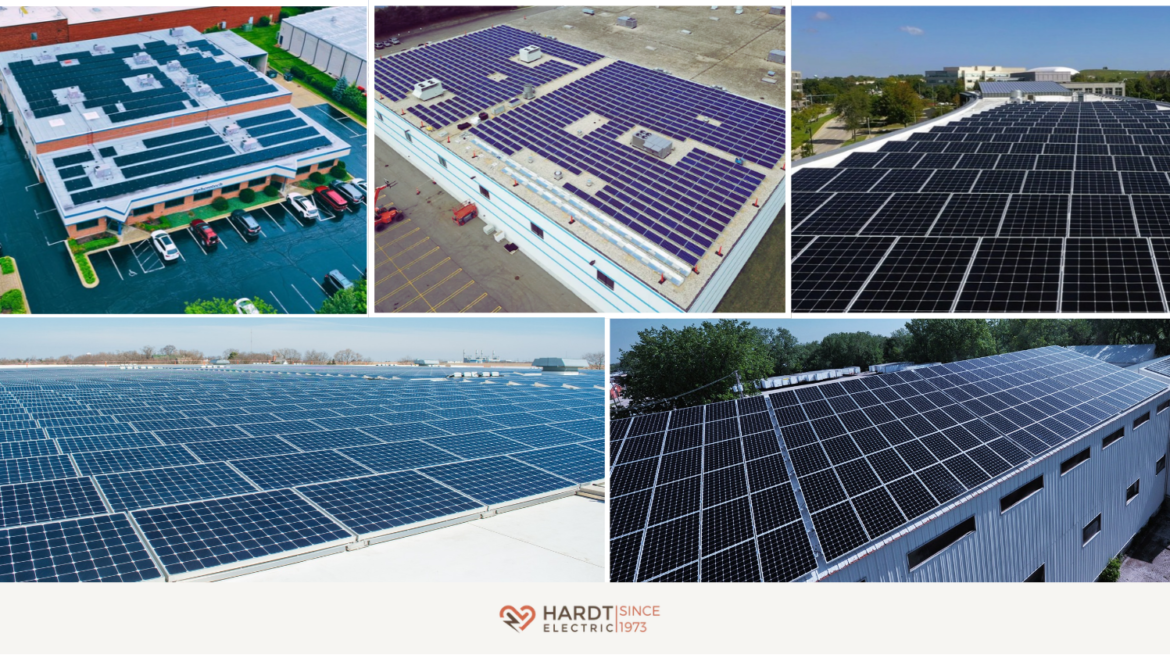
When businesses hear about federal incentives for commercial solar, the conversation often centers on the potential 30% Clean Electricity Investment Credit. But for some qualifying projects, that may not be the end of the opportunity.
Federal law provides additional bonus-credit opportunities tied to factors including domestic content, project location and certain low-income communities. For businesses planning a renewable energy investment, understanding these provisions early can be important because project design, equipment selection and location can affect potential eligibility.
Domestic Content Can Add to the Federal Credit
Qualifying clean-energy projects that satisfy federal domestic-content requirements may receive an additional investment-credit percentage. Under current federal rules, qualifying projects that meet the applicable requirements can potentially receive a 10-percentage-point bonus when the required steel, iron and manufactured products meet U.S. production standards and the project satisfies the applicable wage/apprenticeship or other qualifying rules.
For projects beginning construction in 2026, current IRS guidance uses a 50% manufactured-products cost percentage as part of the domestic-content test. Separate requirements apply to iron and steel. For project owners, this makes equipment sourcing and procurement more than simply a technical consideration—it can potentially affect project economics.
Location Matters
Federal tax law also provides an Energy Community Bonus for qualifying investments located in designated energy communities. These can include certain areas associated with historical fossil-fuel employment or tax revenue, areas surrounding qualifying closed coal mines or coal-fired power plants, and qualifying brownfield sites. For eligible §48E investments meeting the applicable higher-credit requirements, the energy-community provision can potentially add 10 percentage points to the investment credit.
Because eligibility is location-specific and definitions can change over time, businesses should verify a project’s qualification rather than assuming a property is eligible.
Certain Projects May Qualify for an Additional Low-Income Bonus
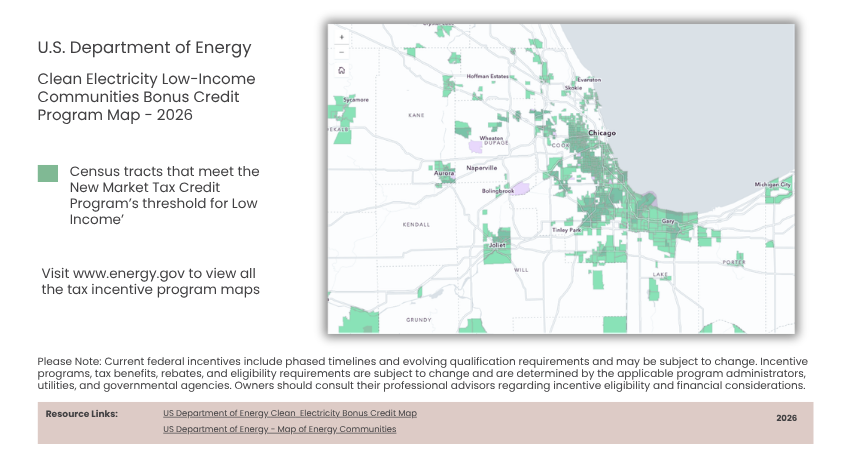
The federal Clean Electricity Low-Income Communities Bonus Credit program provides another opportunity for certain smaller projects.
Qualifying facilities with maximum output below 5 MW can potentially receive an additional 10- or 20-percentage-point credit when they meet program requirements and receive an allocation from the IRS.
Eligible categories include certain facilities located in qualifying low-income communities, on Indian land, or associated with qualified low-income residential or economic-benefit projects.
Unlike some other bonus provisions, this incentive requires an allocation—it is not automatically available simply because a project is located in a qualifying area.
Project Planning Can Influence Incentive Value
These programs reinforce an important point:
The value of a renewable energy project can depend on decisions made long before construction begins.
Equipment sourcing can affect domestic-content eligibility.
Project location can affect energy-community opportunities.
Project size and the population or property being served can affect eligibility for other federal programs.
And prevailing-wage and apprenticeship requirements can significantly affect the underlying federal investment-credit percentage.
That’s why businesses benefit from evaluating incentives during project development—not after a solar system has already been designed and purchased.
Look at the Complete Opportunity
Hardt Electric helps commercial and industrial customers approach solar as an integrated infrastructure investment.
That means evaluating the facility, electrical infrastructure, energy consumption, system design and implementation strategy together—while coordinating with the customer’s financial and tax professionals to understand available incentive opportunities.
The goal isn’t simply to install solar. It’s to develop the right energy solution and understand the full economic opportunity available to the project.
Talk with Hardt Electric about evaluating renewable energy infrastructure for your Chicagoland facility.
Start the conversation: solar@hardtelectric.com