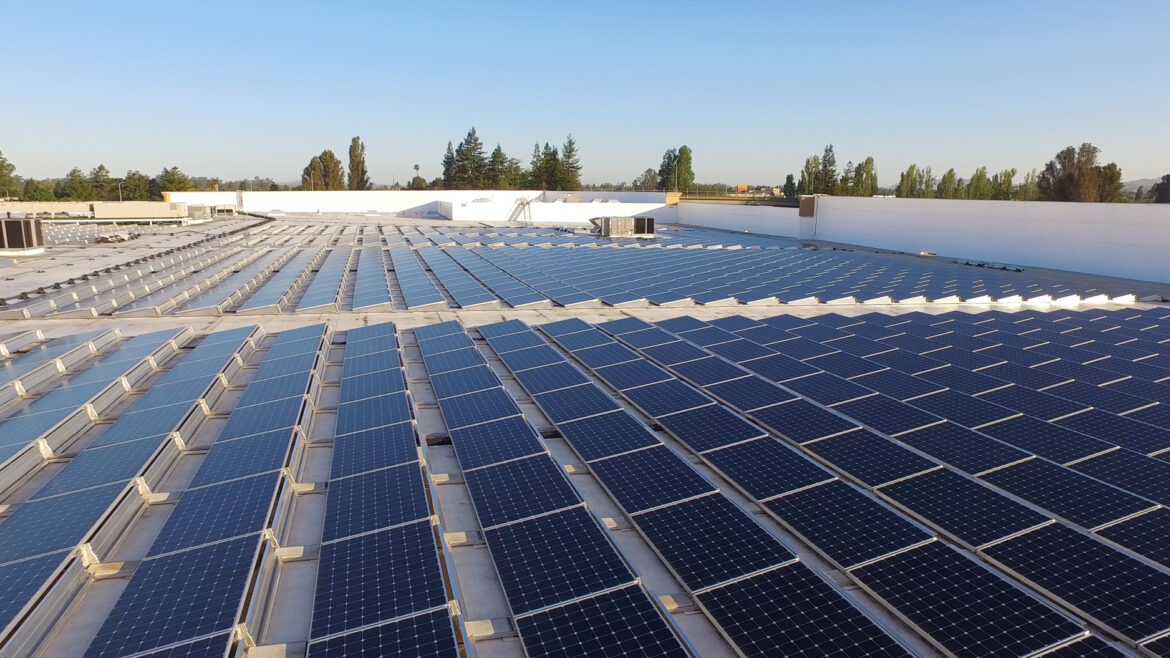
Across the commercial and industrial landscape, renewable energy is no longer a “nice-to-have” sustainability initiative — it is a strategic differentiator that drives resilience, cost competitiveness, and long-term enterprise value. Globally and nationally, energy transformation is reshaping how businesses think about risk, operational efficiency, and stakeholder expectations. In fact, solar adoption in the commercial and industrial sector has demonstrated consistent expansion as organizations seek energy cost predictability, resilience, and decarbonization pathways.
Illinois stands out as a market where policy and economics align in favor of strategic renewable energy deployment. This convergence makes the state uniquely attractive for commercial property owners, manufacturers, logistics operators, and corporate campuses looking to invest in solar, storage, and broader clean energy infrastructure. Below, Hardt Electric shares expert perspectives on why acting now — and acting strategically — matters, and how to navigate the tax, grant, and incentive environment in Illinois to maximize financial and operational returns.
The Strategic Imperative for Renewable Energy Today
Electricity cost increases are business risks. On-site solar and renewable energy infrastructure offer predictable and controllable cost structures, shielding operations from unpredictable utility price inflation. Solar systems can offset a significant portion of energy usage, translating into reduced energy costs over time— an increasingly important competitive lever for asset-intensive businesses.
Distributed energy resources , especially when paired with energy storage, improve reliability and operational continuity. For businesses with critical loads, manufacturing facilities, or logistics hubs, reducing dependence on the grid enhances resilience against outages and changing grid conditions. Customers, investors, and policy makers increasingly expect environmental responsibility in business. A documented renewable energy strategy strengthens corporate ESG profiles, supports sustainability reporting, and can unlock access to new capital.
Federal Incentives: A Window of Opportunity for Accelerated Value is Now
For the foreseeable horizon, federal tax incentives remain among the most powerful tools for reducing the cost of renewable energy investments:
- Investment Tax Credit (ITC): Commercial projects can qualify for a 30% federal tax credit on solar and many other clean energy technologies, directly reducing tax liability dollar-for-dollar. This credit applies to solar PV, battery storage, and related infrastructure, but has new expiration dates with recent legislation – so the time to act is now to utilize this incentive.
- Accelerated Depreciation (MACRS + Bonus): Through the Modified Accelerated Cost Recovery System (MACRS), businesses can recover a large share of project costs in the first few years of ownership, accelerating cash-flow benefits and improving internal rates of return.
The combination of the ITC and accelerated depreciation can reduce net project costs dramatically, often underpinning payback periods and ROI scenarios that align with corporate capital planning horizons.
Illinois has established a robust set of policies that make clean energy investments financially compelling for commercial businesses:
Illinois Shines (Adjustable Block Program)
Illinois Shines is the state’s central incentive program, designed to accelerate solar deployment through long-term renewable energy credit contracts (RECs). Businesses with rooftop or ground-mount solar systems can secure revenue streams through the sale of Solar Renewable Energy Credits generated by their system over time.
With capacity allocated annually and pricing established in competitive blocks, early project assessment and timely application can maximize incentive value.
Illinois Renewable Portfolio Standard (RPS)
The Illinois RPS — strengthened under the Climate and Equitable Jobs Act (CEJA) — requires utilities to source an increasing share of electricity from renewables and helps sustain demand for RECs and related revenue opportunities. This creates a stable, policy-driven market for renewable energy value streams.
Netting, Property Tax, and Other State Benefits
For commercial solar systems, favorable netting policies and property tax valuation rules help ensure that clean energy investments don’t inadvertently increase tax burdens on real estate. Across the state, utilities and municipalities also offer rebates and expedited permitting pathways that enhance project economics and reduce deployment timelines.
With the recent passing of the Clean and Reliable Grid Affordability Act, Illinois has set a goal of 3 gigawatts of energy storage by 2030 – will fast-track projects and deepen incentives for commercial/industrial buildings as the program rolls out mid-year.
How to Think About Incentives Strategically
Here are key strategic questions leaders should ask when evaluating renewable energy investments:
- What is our timeline to lock in federal incentives?
Federal tax credit eligibility often hinges on “begin” construction criteria and project timing. Early engagement with your EPC is critical to utilize available funding.
- How does on-site generation align with our energy cost and resilience goals?
Quantify expected savings not just from incentives but from reduced energy consumption, avoided peak charges, and resilience benefits.
- Can we stack state and federal incentives while optimizing REC revenue?
Working with an experienced, local EPC like Hardt Electric, who understand Illinois Shines and REC markets can enhance net present value.
- What ancillary infrastructure enhances total value?
Battery storage, EV charging infrastructure, and energy management systems often complement solar investments not just operationally but financially. Energy storage systems offer tremendous financial and operational benefits.
An energy storage system (ESS) significantly enhances commercial solar by storing excess power for peak times, slashing expensive demand charges, ensuring 24/7 power with increased resilience , optimizing solar self-consumption, and providing the opportunity to sell energy back to the grid, ultimately boosting ROI and operational continuity through intelligent energy management.
A Leadership Mindset for the Energy Transition
Smart corporate energy strategy isn’t just about going solar — it’s about aligning your energy procurement, capital planning, and sustainability goals in a way that drives measurable business advantage.
At Hardt Electric, we approach every renewable energy project as a long-term strategic partnership — not a one-time installation. Our role as a full-service EPC is to design, engineer, install, and maintain high-quality, high-performing systems that meet or exceed your operational and financial objectives. We know that energy decisions have real balance-sheet implications, so we support our clients by navigating the complex landscape of federal, state, and local incentives to ensure they capture every available dollar to offset capital investment.
Our engineering philosophy is centered on maximizing ROI and lifecycle performance, creating renewable energy infrastructure that not only delivers immediate savings but continues to support business continuity, resilience, and scalability for years to come. Whether your organization is planning for future growth, electrification, or broader sustainability commitments, Hardt Electric ensures your energy infrastructure evolves with your business — reliably, efficiently, and strategically.
The renewable energy transition is reshaping how successful companies define competitive advantage. In Illinois today, the alignment of federal incentives, state policy, and market economics presents a strategic moment — one that distinguishes forward-thinking businesses from those waiting on the sidelines.
Hardt Electric is here to partner with you on that journey. If you want to explore how solar and renewable infrastructure can become a strategic asset for your business — not just an environmental statement — let’s talk about your roadmap forward.
Get in touch at solar@hardtelectric.com