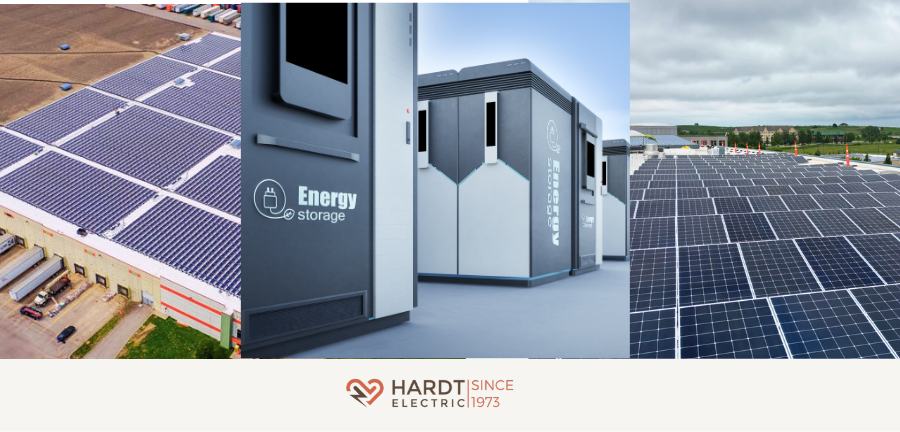
The energy landscape for Illinois businesses is changing, and solar generation is only part of the opportunity. Battery Energy Storage Systems (BESS) can give commercial and industrial facilities greater control over how and when electricity is used, while Illinois policies and utility incentives are creating additional opportunities for businesses considering storage.
Recent changes in Illinois energy policy make this an important technology for businesses to evaluate as part of their long-term energy infrastructure strategy.
Battery storage gives a facility the ability to store electricity and make that energy available at another time. Depending on the facility’s energy profile, utility rate structure and system design, storage can support strategies including energy management, peak-demand management, greater utilization of on-site renewable generation and improved facility resiliency.
For commercial and industrial operations with significant energy requirements, these capabilities can add another dimension to an energy infrastructure investment.
Illinois Is Expanding Its Focus on Energy Storage
Illinois has made energy storage a larger component of its statewide energy strategy. The Clean and Reliable Grid Affordability Act, which took effect in 2026, expands the state’s energy storage policies and establishes a statewide goal of adding significant new storage capacity.
For qualifying commercial and industrial customers, utility rebates may also help offset the cost of energy storage. Current programs can provide qualifying systems with incentives based on the battery’s storage capacity, subject to program, utility and project requirements.
Importantly, recent changes are also expanding opportunities for certain stand-alone storage systems, meaning battery storage doesn’t necessarily have to be viewed solely as an addition to a solar project.
Solar + Storage – or Storage on Its Own?
For businesses considering renewable energy infrastructure, solar and battery storage should increasingly be evaluated as part of a coordinated energy strategy. The right solution depends on the building. A facility’s electrical demand, utility costs, existing infrastructure, operating schedule, resiliency requirements and long-term energy goals can all influence whether solar, storage or a combination of the two makes financial and operational sense.
Design and Integration Matter
Battery storage isn’t simply another piece of equipment. Successful implementation requires careful consideration of electrical infrastructure, system controls, interconnection, capacity, safety and long-term operating objectives.
Hardt Electric is a qualified electrical contractor and EPC supporting commercial solar and battery energy storage projects throughout the greater Chicagoland region. We help Chicagoland businesses evaluate, engineer and implement solutions around the specific requirements of their facilities. Before investing in energy infrastructure, understand what your facility needs today…and how new technologies and incentives could help position it for tomorrow.
Hardt Electric can help your business evaluate solar, battery energy storage and available incentive opportunities as part of one integrated energy strategy. Get in touch to start the conversation: solar@hardtelectric.com